About
The game that kept me up late into the night revolved around multiplayer servers where players could explore, build, and survive together in a post-apocalyptic world. Similar to Minecraft and Roblox, hosting custom multiplayer servers allowed for a wide range of gameplay styles and experiences. As the game grew in popularity, I saw an opportunity to create something different. Many servers lacked creativity, and I wanted to build a community that prioritized fairness and trust that was free from the “corruption” from server creators and their team. On many servers, administrators abused their power by spawning rare items, unfairly deleting player builds, or banning players over personal conflicts. My goal was to create a server that emphasized transparency, integrity, and reliability, defining how servers should be operated for all players.
Goal
Prevent Abuse of Authority
Transparency & Player Advocacy
Community-First Environment
My Plan
This was my plan going into the project. I wasn't expecting to make money, it was purely a passion project. However, as the server grew, I realized that to maintain and scale the community, I needed to approach it with a business mindset.
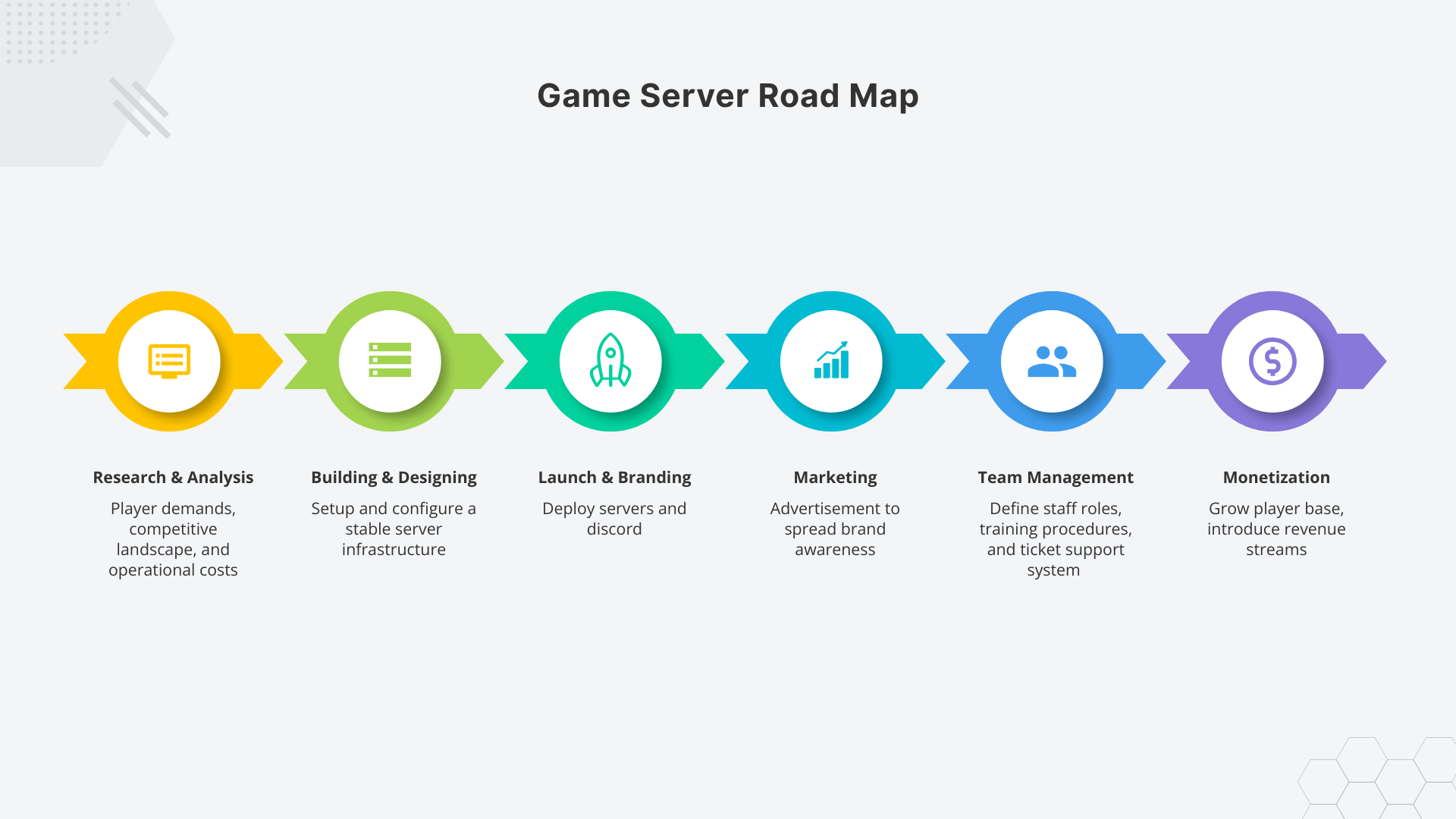
Translating Game Logic to Business Operations
This was the business plan I created to help guide my decision making. It's similar to selling real life products but in a digital environment. I had to consider the customers, the product, how to retain players, how to support them, how to generate revenue, and how to operate the server efficiently.
The Mindset Shift
Approaching the server as a business allowed for decisions based on sustainability and long-term growth rather than short-term gains. It was a hard shift from thinking of it as just a game to understanding the complexities of managing a community.
Infrastructure & Workflow
My experience in the infrastructure and ticket workflow system that kept the satisfaction of players high. I prioritized quick response times and clear communication to ensure players felt valued especially, when dealing with payments!
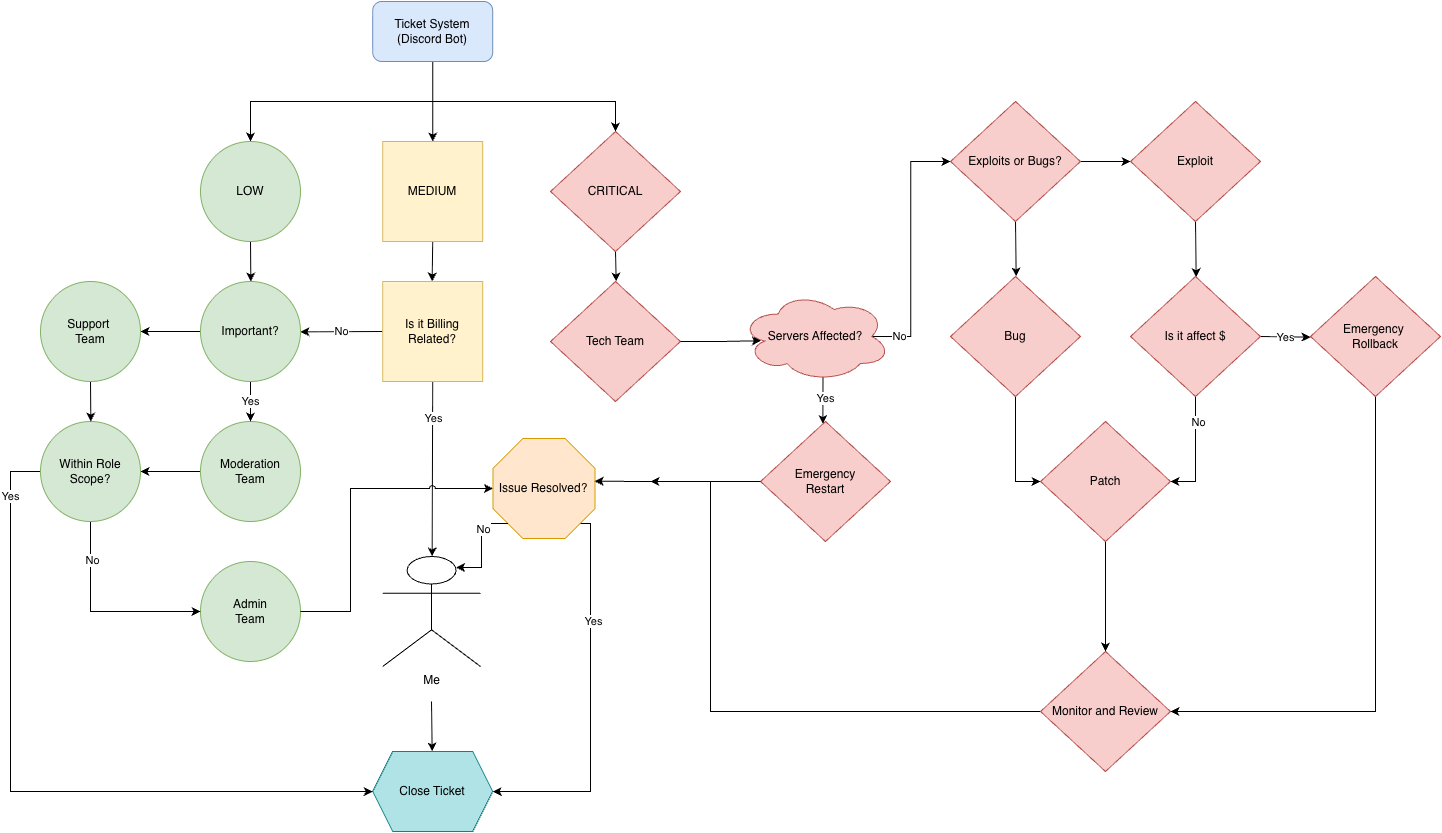
Example: Workflow of Support System
Structured ticket system by importance
- Low: Questions, Feedbacks, Reports, etc.
- Medium: Payment or Account-Related Issues
- Critical: Server Stability, Exploits, Game-Breaking Issues
Tickets were categorized and sent to the appropriate team based on priority and scope.
Clear escalation paths ensured efficient resolution and prevented delays affecting player retention.
Resolved tickets of the same issues were documented and referenced for future incidents.
Growth & Marketing Strategy
Having even 5 players on a server was considered a success as that meant the server had potential to other players. I had to get creative with marketing strategies to attract and retain players, especially since the game was a niche title with a smaller player base compared to mainstream games.
Growth was driven through a mix of paid advertising and direct community outreach. I invested in "Top Server" website listings and paid for customized display banners with flashy animations to attract more clicks.
During the early stages, I experimented with direct promotion, offering incentives such as Steam gift cards and gifted games. This helped trigger a snowball effect, where new players would join and stay, attracting even more players though high player count and word of mouth.
Monetization & Pricing Strategy
Developing a revenue model that maintains fairness.
Value Contents
Digital goods designed to enhance the overall player experience, including community engagement and in-game benefits.
Reward-Based Ads
Players can watch ads to earn in-game currency. The reward was designed to feel satisfied without giving any gameplay advantage.
Fair Play Balance
In a competitive PvP environment, products were designed to be as balanced as possible to avoid major P2W(Pay to Win) advantages.
I, initially offered only cosmetic items such as colored name tags as a source of revenue. As the community grew, I gradually introduced tiered subscriptions that provided incremental benefits without impacting core gameplay balance. Each subscription tier applied across all servers (no matter the gamemode) rather than being restricted to a single server, which significantly increased in value for players.
The tiered subscription model was designed to appeal to different player segments. Casual players could support the server and receive minor quality of life improvements, while more dedicated players could invest in higher tiers that offered meaningful benefits. Even at the highest tier, gameplay balance remained fair, ensuring the integrity of the free to play players.
Player demographics were also carefully considered. Based on my data, the majority of players were between 15 and 22 years old, so pricing was kept accessible. The highest tier was priced at $90 USD, which was considered reasonable relative to the value provided and the level of engagement from the player base.
While gameplay integrity was always preserved, the highest tier became one of the best sellers for a different reason. There was an unspoken understanding within the community that players willing to invest at this level were demonstrating loyalty to the server. I personally reached out to these players, built relationships with them, and invited them to join the support team, where they helped monitor activity, guide newer players, and reinforce community standards. From there, committed members had a clear pathway to progress into administrative roles, effectively making the highest tier a gateway into the staff ecosystem rather than a gameplay advantage.
In PVP (Player vs Player) environments, even small advantages can influence purchasing decisions. To address this responsibly, I strategically adjusted pricing and designed “fair” implementations to avoid P2W (pay to win) mechanics. For example, the Platinum tier offered a substantial amount of daily credits that reduced repetitive farming. This was balanced by allowing free to play users to earn the same amount through ads within a few hours. Ultimately, the value proposition came down to convenience, which reduced time spent grinding so players could spend more time actually playing the game.
Another key incentive that drove revenue was the upgrade system. Many players were unable or unwilling to pay for higher tiers upfront, so the system allowed them to progressively upgrade their rank over time. Also, a lot of players were tier locked. Instead of a single large purchase, players could incrementally invest over the span of weeks or months, making higher tiers more attainable without financial pressure. This approach was a gateway to long term engagement, and increased lifetime value per player, as users were more likely to continue supporting the server once they had already invested into their progression.
The best strategy was getting hands on engagement with the community and building relationships with players. If the server owner (me) was seen playing and interacting on the server, a lot of players were more willing to support the server through purchases because they felt a personal connection and wanted to contribute to the success of something they cared about. I often chatted, participated in events, battles, and listened to player feedback, which helped foster a sense of community and loyalty.
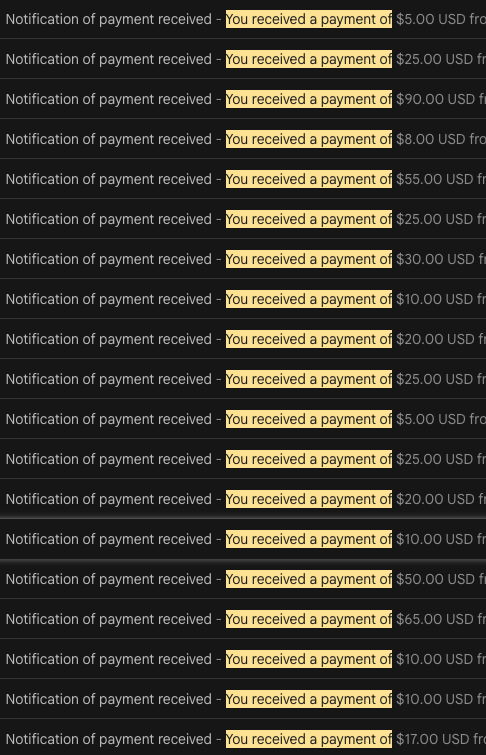
Proof of transactions!
Player Retention Based on Tiers
90 days retention period based on 250 players per tier
Comparing Revenue Growth
Tracking Average Revenue Per User (ARPU) After Upgrade Implementation from H1 2019 to H2 2020
Subscription Tiers
- Special Commands
- Custom server cosmetics
- Bronze Kit packs
- Priority Queue Access
- Everything from Bronze
- Silver kit packs
- +2000 Blood Credits Daily
- Weekly reward crates
- Discord role badge
Data, Analytics & Optimization
Tracking and analyzing player behavior, session time, and ping helped increase player retention.
Retention Optimization
Events were strategically launched on weekdays and 1.5 hours before peak traffic. This ensured the server appeared at the top of listings when players logged in after work/school
Metrics
Although not as nice as this dashboard, I had custom plugins that synced with the Discord bot to display real time data from the servers, along with daily/weekly summaries to a private channel for quick monitoring.
Avg Hours Player / Day
Tracked for the top 4 most active servers
Monthly Subscribers
% of active players who subscribed during the month of May
New Players Retention Rate
For 1 week after initial login on any server.
Max Players Online
Across all servers
Server Uptime (%)
Not proud of this number, there were a LOT of downtimes and server issues even with server upgrades.
Ticket Resolution Rate
Percentage of support tickets resolved within the month
Data from May 2021 is not accurate, as I did not anticipate creating a website for this project, and much of the data from the discord bots were deleted or corrupted.
Leadership & Transparency
One of the most difficult aspects of leadership was separating personal relationships from professional responsibilities. Many staff members were long term friends formed through years of gaming together. I lacked the maturity to make tough decisions that went against my goal of creating a server that prioritized transparency and preventing abuse of power. Without formal contracts, conflicts arose between staff and the community like items being spawned in, players being banned without proper evidence, and a civil war between staff members. Recognizing these issues, I redesigned the staffing structure to mitigate them while maintaining fairness and accountability.
The Pivot To Professionalism
Defining Guidelines
- Strikes: 3 Strikes System for breaking rules
- Scope of Roles: A Clear Definition of Duties
- Professionalism: Be Respectful, Don't Swear, etc.
Training & Monitoring:
- Staff received training to ensure their understanding of guidelines.
- Constant monitoring and feedback to ensure compliance.
Performance Review & Contracts
- Staff performance was reviewed every week for 4 weeks to ensure full understanding of roles.
- Contracts and compensation were implemented to reinforce the seriousness of their roles.
Managing a Project Within a Project
Learning and leading custom plugin development from scratch taught me valuable lessons in project management, teamwork, and communication.
The Challenge
As the server scaled, custom plugin development were needed for differentiation and player retention. They were designed to offer unique gameplay mechanics, staff tools, and quality of life improvements.
Starting out, I assembled a team with no clear workflow or project management experience. The team consisted of:
- A designer responsible for UI/UX and asset creation.
- A developer with experience in plugin development and coding.
- A tester responsible for quality assurance and bug reporting.
Communication and management were informal, relying on Discord messages and voice calls. During the first few plugins development, it quickly became apparent that our initial approach was unsustainable.
Workflow Bottleneck
Months into our major custom plugin development, I noticed significant delays and inefficiencies. Our workflow was linear in the following: Design → Development → Testing → Push. Each stage depended entirely on the previous one completing.
Linear Dependency
Design delays blocked development: The developer was idle, waiting for finalized specifications and asset references before starting implementation.
Development delays blocked testing: Without working features to validate, the tester had nothing to do. Their capacity was completely wasted.
Testing delays blocked server growth: When testing began, bugs and design flaws required changes to development, restarting the entire cycle.
Any delay in one phase affected all phases leading to delays and frustration.
Root Cause
The core problem was that work was fully dependent on earlier statges. Often, team members couldn't begin until the previous step was finished, which created idle time and made the entire workflow fragile. A delay from one person stalled the entire team.
Restructuring the Workflow
This was the point where I decided to improve how I managed the team. I spent time watching YouTube tutorials and reading blogs on project management tips. I then called an emergency planning session to redesign our approach, aiming to enable parallel work while maintaining quality and consistency.
1. Defined Core System Foundations
Before work began, we in-depthly, defined the core structures for each feature. This gave the team a clear understanding of what to build against, even if designs evolved.
Example: When designing a new inventory storage system, we first agreed on how items would be stored, retrieved, and managed. This allowed the developer to start building the backend logic while the designer worked on UI concepts and assets.
2. Parallel Workstreams
Instead of moving work through a single linear pipleline, we split features into samaller components that could be worked on simultaneously.
Example: When designing new weapons, the designer created temporary 3D models that could be used immediately, while the developer built the core weapon blueprints. At the same time, the tester validated weapon balance and ran live gameplay tests to catch issues early.
3. Ownership and Accountability
Each team member were responsible for specific deliverables with clear deadlines. I removed the need for constant approvals, if the designer thought a feature could be improved or done differently, they had the power to make the decision without contacting me.
Example: The developer modified a core damage mechanic without waiting for my approval, as they were confident it would improve gameplay. They informed the team of the changes and adapted their work to align with the changes, keeping the project on track.
4. Progress Calls & Check Ins
I held live calls on Discord with everyone muted and working on their tasks. This helped with questions and clarifications. There were also hourly checkins to ensure everyone was on track.
Operational Framework
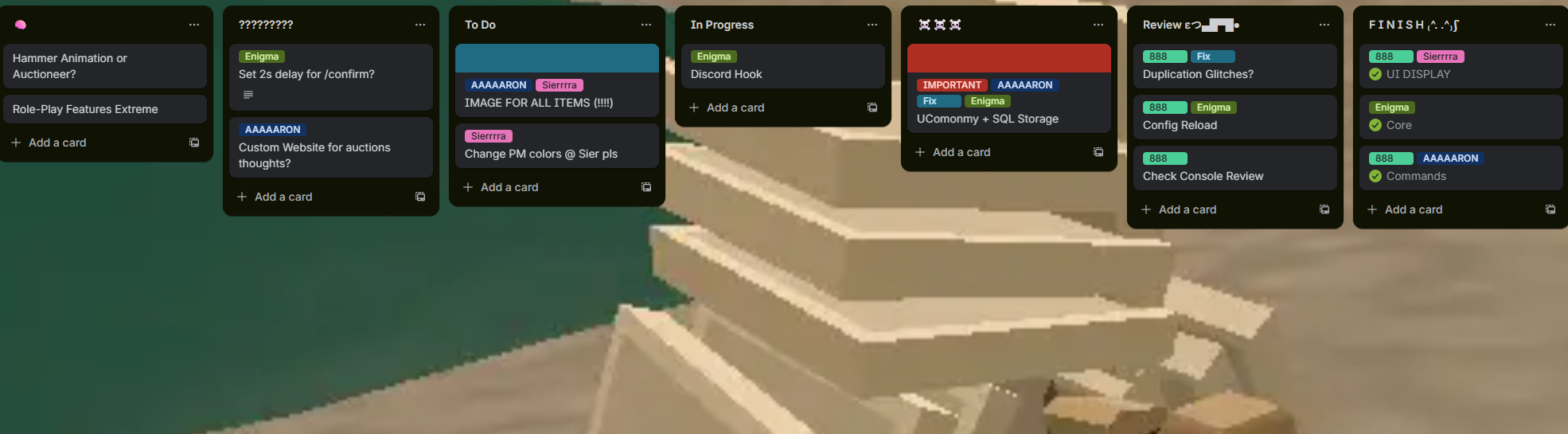
We used trello to manage our workflow, visualizing tasks and their statuses. Huge help in management compared to using Discord
Results and Impact
The workflow restructuring had immediate and measurable impact on delivery velocity:
Improvements
The defined workflow and operational framework became our standard for all future plugin development. Team members reported higher satisfaction due to clearer expectations and reduced frustration from delays. Even during high pressure periods, we maintained steady progress without burnout and met deadlines.
Ending
Key Lessons Learned
Leadership
Leading game server operations taught me that effective leadership starts with clarity. By setting clear direction, defining roles, and establishing transparent communication, I was able to build a team that could move efficiently and adapt to challenges with confidence. Leadership is not about control and dictatorship, but about creating an environment where people can thrive and contribute their best work.
Operations
Operating a game server taught me that success comes from clear pathways, not luck or “winging it.” By implementing structured workflows, roadmaps, guidelines, and metrics, I was able to optimize performance, streamline processes, and keep the team aligned. I learned that strong operations leadership means creating systems that allow consistent results, adaptability, and efficiency across the board.
Business & Customer Impact
Running a game server taught me that business success depends on understanding and delivering value to your customers. By analyzing player behavior, responding to feedback, and optimizing the experience, I was able to drive engagement, retention, and growth. I learned that aligning processes and decisions with customer needs is just as important as managing the team or the system.
Passion
I didn't know the server would turn out successful. I just wanted to create a fun server for my friends. I was passionate about the game and the community, and that passion drove me to learn, adapt, and persevere through challenges. This project has taught me that genuine intrest and persistence can drive real growth and results.
Why I Stopped the Project
After over 3 years of running the server, and 5 years of gameplay, I made the difficult decision to shut it down in early 2022. While the server was profitable and the community was alive, several factors led to this outcome:
1Academic Priorities
I was entering my middle years of university and needed to focus on completing my degree. The server required 6+ hours of daily management, which was not sustainable. At one point, I was juggling coursework, exams, and server operations, leading to burnout.
2Burnout and Stress
Managing a community of 25,000+ members, handling disputes, resolving technical issues, and maintaining content updates became mentally exhausting. I started this project with a burning passion for gaming and community building, but over time, I lost that enthusiasm. Even though I was very profitable, it was simply "not fun". I could've hired more staff to help, but I felt that would just prolong the inevitable.
3Declining Game Population
The game itself was losing popularity, (BUT IT WAS AT ITS PEAK AFTER I STOPPED) with the overall player base declining significantly. This made it harder to sustain growth and retention, even with our optimized strategies and engaged community. There were promises and hints of a sequel which never happened. Looking back today, I made the right call!
4New Opportunities
While the server taught me invaluable lessons in operations, management, and business, I realized my long term career goals were better served by pursuing formal opportunities in operations, business, and management!
Reflection
Shutting down the server was one of the hardest decisions I've made. I had built something meaningful that thousands of players enjoyed daily. I've made wonderful friends and memories along the way. However, I don't regret it. The experience gave me real world skills that shaped my professional development. It taught me the importance of balance, sustainability, and knowing when to pivot. While I miss the community and the thrill of running the server, I'm proud of what I accomplished and excited for the next chapter.
Note: If you really want to know the game or more details, shoot me an email!